















HONEY
Bodysuit with bottom snaps, 3 to 18 months.
 Example: HONEY - Baby baby bodysuit
Custom Baby & Kids Apparel
Family days, welcome gifts for new parents and mascot merchandise all run through kidswear, and small skin raises the bar: soft combed cottons, water based inks with no scratchy print panels, and OEKO-TEX certified options across the range. We supply custom baby and kids apparel across Europe from first bodysuit to first football shirt.
It grows with them.
Baby and kids apparel
Follow a nursery day hour by hour, then watch a size run out on the growth wall.
196 products in this collection
WHO median heights; children vary. Labels give an age but garments are cut by height.
FAQ 02FAQ
Plan by moments: something soft for the day, an apron for painting, a garden hat, a bib for lunch and a top with the nursery's name. Sizes start at 3 months.
Children of the same age can be centimetres apart, so the European standard EN 13402 sizes children by height first. Measure, then match the size chart.
Yes. JAMIE is an apron and hat set in three colours, from 10 units, and PACHU is an apron to colour in, with five crayons. Both take a screen print of your logo or name.
Bodysuit with bottom snaps, 3 to 18 months.
Example: HONEY - Baby baby bodysuitT-shirt with shoulder snaps, 6 months to 2 years.
 Example: BABY - Baby T-shirt
Long-sleeve piqué polo, ages 1 to 12.
 Example: CARPE CHILD - Kids' long-sleeve polo shirt
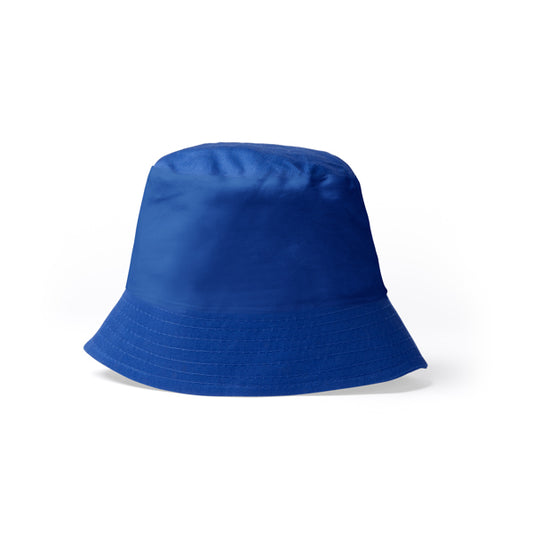
Cotton bob hat in kids' size.
 Example: ZUMA - Cotton bob hat
Apron and hat set with a front pocket.
 Example: JAMIE - Non-woven colour apron
Apron to colour in, five crayons included.
 Example: PACHU - Non-woven apron
Bib with hook-and-loop fastening.
 Example: EPI - Baby bib in cotton
Tell us the quantity, the date and where it is going. Catalogue items usually ship 7 to 14 working days after artwork approval, to all 33 European markets. Minimum quantities vary by product, and we confirm them in your quote.
Baby and kids apparel
Line up a class in your school colour, teachers included, then walk through a school year.
196 products in this collection
FAQ
In England, from September 2026, primary schools may require no more than three branded uniform and PE items. Malta's state schools wear a tracksuit uniform.
In Spain the babi is a smock worn over clothes to keep them clean; in Italy the grembiule has done the same job for generations.
Plan by season: T-shirts and polos for September and June, sweatshirts for autumn, a fleece or softshell for winter. Children grow at least 5 cm a year at primary age.
Cotton T-shirt from age 1 to adult 5XL, 36 colours.
 Example: BEAGLE - Unisex T-shirt
Organic cotton T-shirt, OCS, 17 colours.
 Example: BREDA - Men's T-shirt
Piqué polo that washes at 60 °C, ages 1 to 12.
 Example: PEGASO PREMIUM - Men's polo shirt
Crew-neck sweatshirt, 280 g/m², 38 colours.
 Example: CLASICA - Unisex sweatshirt
Hoodie with no drawstrings in kids' sizes.
 Example: URBAN - Men's hoodie
Zip fleece in kids' sizes 2 to 16.
 Example: NEW ARTIC - Men's fleece jacket
Softshell jacket, kids 4 to 16 and adults.
 Example: NEBRASKA - Men's softshell jacket
Tell us the quantity, the date and where it is going. Catalogue items usually ship 7 to 14 working days after artwork approval, to all 33 European markets. Quotes from 1 unit.
Baby and kids apparel
Kit a junior player for match day, the pool or the bus, then make the class T-shirt with a handprint from every child.
196 products in this collection
Paint
T-shirt colour
Tap the T-shirt to stamp a hand. Catalan school trips, the colònies, go back to 1893, and the class T-shirt is the souvenir.
FAQ 08FAQ
A match set, a tracksuit for travel and a rain layer. Our sports sets, tracksuits and windbreakers run from age 4 into adult sizes, so coaches match the team. Names and numbers can be added on request.
A cotton T-shirt in the class colour, from age 3 to adult 5XL so teachers and parents match. Children's drawings or handprints can become the print.
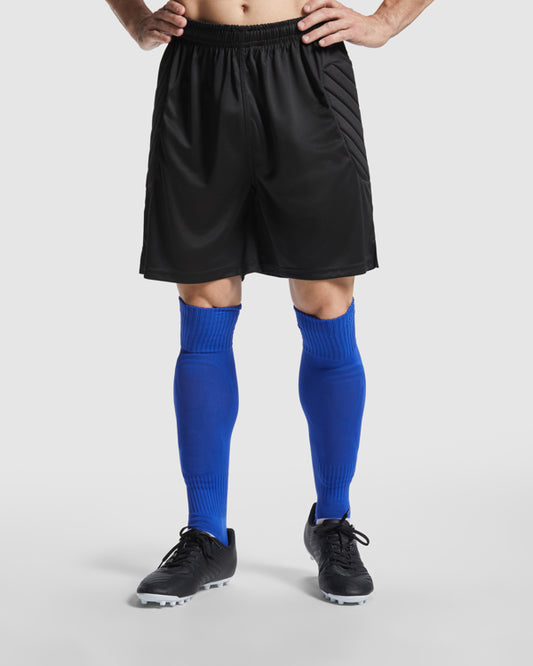
T-shirt and shorts set, ages 4 to 16.
 Example: TITAN - Unisex sports set
Recycled waffle T-shirt, GRS, 17 colours.
 Example: IMOLA - Men's T-shirt
Swim shorts, ages 4 to 16.
 Example: AQUA - Men's swim shorts
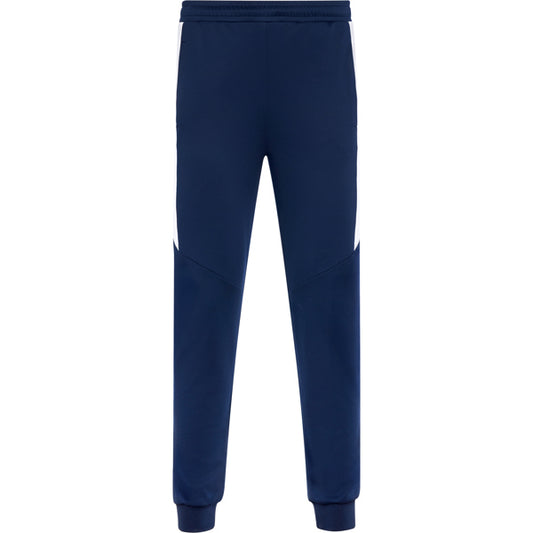
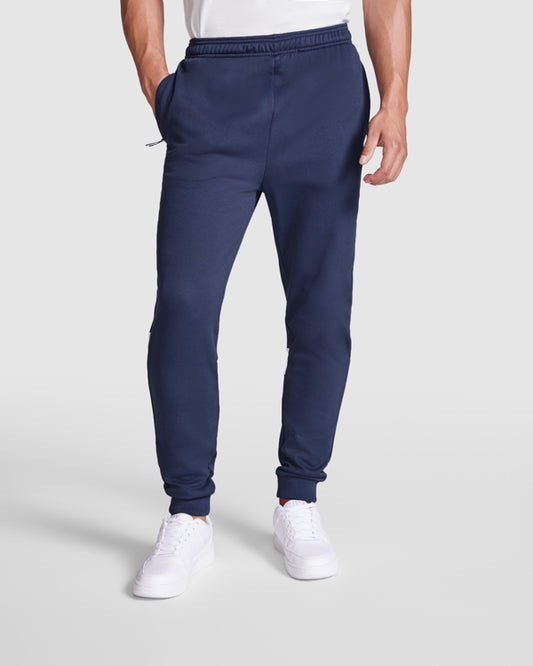
Tracksuit for travel days, ages 4 to 16.
 Example: CRETA - Men's tracksuit
Windbreaker with reflective details.
 Example: ANGELO - Unisex windbreaker
Combed cotton T-shirt, age 3 to adult 5XL.
 Example: BRACO - Men's T-shirt
Tell us the quantity, the date and where it is going. Catalogue items usually ship 7 to 14 working days after artwork approval, to all 33 European markets. Quotes from 1 unit.
The safety rules, certifications and decoration choices that matter most when the wearer is small.
Children’s clothing sold in Europe must be safe under the EU General Product Safety Regulation, and two areas matter most for branded kidswear. Cords and drawstrings are covered by EN 14682: for young children up to 7 years, or up to 134 cm tall, there must be no cords or drawstrings in the hood, head or neck area at all, and children from 7 to 14 may not have drawstrings with free ends around the neck. That is why kids’ hoodies come with fixed hoods and no cords.
Small parts are the second risk. Buttons, press studs and anything attached to baby garments must withstand strong pulling, and the CEN/TS 17394 series sets those attachment requirements for infants’ clothing. For the under-threes we therefore keep branding flat and stitched: printed or embroidered logos, never glued-on gems, sequins, loose patches or detachable trims. We choose garments designed for children by their manufacturers, and we will always tell you if an idea is not suitable for small children.
OEKO-TEX Standard 100 tests textiles for harmful substances and sorts them into four product classes by how closely they touch the body. Class I is the strictest: it covers articles for babies and toddlers up to 3 years of age, with the tightest limit values and an extra test confirming that colours and prints do not bleed or stain when a baby sucks or chews the fabric. For bodysuits, bibs and anything likely to end up in a small mouth, Class I is the label to look for.
One detail is worth knowing. A certificate covers the finished article as it was tested, so a logo added afterwards is not automatically part of it. For baby garments we therefore favour water-based inks and decoration materials that carry their own certification where the supplier offers them, and we tell you exactly what is certified before you order. Certificates can be supplied with your order, and organic GOTS-certified cotton adds further assurance about how the cotton was grown and processed.
For babies and toddlers, soft water-based prints are the kindest choice. The ink soaks into the cotton rather than sitting on top, so the logo stays breathable, flexible and almost impossible to feel, with no scratchy edges against delicate skin. Embroidery looks lovely on older children’s polos, sweatshirts and jackets, but on baby garments the reverse of the stitching can rub, so we keep it small and covered with a soft backing, or choose print instead.
Heat transfers suit older children’s sportswear and names, while large, heavy plastic-feel prints are best avoided on baby clothes because they trap heat and stiffen the fabric. Position matters too: keep decoration away from the neckline and from the cuffs that babies chew. On bibs, the front panel is the natural home for a logo or a sweet message. Every garment should be washed before it is first worn, which softens prints and removes any finishing residues.
European kidswear is sized by the child’s height in centimetres, with an age as a rough guide. Baby sizes typically run 56 for newborns, 62 and 68 for the first months, 74 and 80 up to about a year, and 86 and 92 up to about two years, often labelled as 3, 6, 12 or 18 months instead. Children’s sizes continue from 98 cm at around two to three years up to 158 or 164 cm at twelve to fourteen, often shown as 3/4, 5/6 or 7/8 years.
Ages are only a guide: two children of the same age can be two sizes apart, so for clubs and schools ask parents for height rather than age. For gifts to newborns, choose 6 to 12 months, because newborn sizes are outgrown within weeks. Teenagers often fit adult XS or S better than the largest children’s sizes. Every product sheet has its own chart, which we send with your quote, and mini versions of many adult styles let families dress alike across the whole size range.
Updated October 2026
Welcome gifts, family days, mini-me kits and the personal touches children remember.
The gifts parents keep are soft, useful and quietly branded. Think a bodysuit, a bib and a small towel or sun hat in gentle, gender-neutral colours, in organic or OEKO-TEX Class I cotton, sized 6 to 12 months so it still fits once the first wave of newborn gifts no longer does. A small logo, or a short line welcoming the newest member of the team, feels far warmer than a large corporate print.
Many companies add a matching adult T-shirt for the parent, which turns a gift into a moment worth photographing. If gifts are sent to employees’ homes, collect addresses with consent and only for that purpose, or deliver to the office for colleagues to hand over. A modest stock held centrally means every new arrival is welcomed the same week, rather than whenever a new order can be placed. It is one of the most appreciated gestures a company can make, at a very modest cost.
Yes, and it is one of the nicest uses of branded clothing. Many styles in our range are made in men’s, women’s and children’s versions of the same garment, in the same colours, so a family day, a sports club or a company summer party can dress grown-ups and children alike: the same polo, sweatshirt or softshell from small children’s sizes up to adult 5XL. In group photos, that consistency is exactly what makes everyone look like they belong.
Children’s versions are proportioned for children rather than simply shrunk, and the logo is scaled to the smaller size so it looks right on both. For schools, nurseries and sports academies, the same principle lets every age group wear one recognisable kit. Tell us the age range and the adult sizes you need, and we will shortlist the styles that cover everyone in one colour, from the youngest to the tallest.
Personalisation is possible, and for teams, camps and clubs a first name or a number is part of the fun. Names are printed or embroidered piece by piece from your list, in one font for consistency, and priced per name. For young children, though, many schools and child-safety organisations advise against displaying a child’s name on the outside of clothing, because a stranger who reads it can call the child by name.
The considerate alternative is a name printed on the inside label or the inner neck, where teachers and parents can find it and the public cannot. For sports teams, numbers on the back identify players just as well. Whatever you choose, treat the list as personal data about children: collect only what you need, share it only for production and do not keep it longer than the order requires. We handle it on the same basis.
Children love bold, simple, colourful designs, and small garments reward them. Scale artwork to the garment: a front print 28 cm wide on an adult shirt should be around 18 to 22 cm on a child’s, and 8 to 12 cm on a baby bodysuit. Thick outlines, a few strong colours and large shapes read well; fine text and thin lines do not. Full-colour transfers and water-based prints reproduce illustrations and mascots beautifully.
Your own mascot, character or illustration is ideal, and we can help simplify it for small sizes. We can only reproduce artwork you own or are licensed to use, so famous cartoon and film characters are not possible without the rights holder’s permission. A friendlier idea is to give your own mascot a starring role across the range, from bodysuits to adult tees, so it becomes the thread that ties the whole family together. If you only have a JPG or PNG, we redraw it as a clean vector at no charge.
Updated October 2026
Prices, timing around school years and growth spurts, sustainable choices and delivery to schools and clubs.
Children’s garments are generally priced a little below their adult equivalents. Prices on this page are from-prices per unit including a one-colour print at a reference quantity of 100, excluding VAT. As a guide, kids’ T-shirts start at around 4 euros, kids’ polos at around 6 to 7 euros, sweatshirts and hoodies at roughly 6 to 13 euros, softshells and padded vests at roughly 14 to 18 euros and parkas at roughly 20 to 27 euros, with aprons for little chefs from under 2 euros.
The final price moves with the garment, the decoration method, the number of positions and any names, which are priced per piece. Quantity matters too, with unit prices stepping down at roughly 50, 100 and 250 pieces. There is no hard minimum, we quote from a single bodysuit. EU VAT-registered organisations outside Estonia are invoiced under reverse charge. Send us your logo and the age range and you will have a written quote, usually within one working day.
Order close enough to the date that sizes are still right, but early enough to avoid peak-season delays. For the new school year, confirm orders by late June so garments arrive before the summer closure; for summer camps, by April or May; and for autumn sports seasons, around six weeks before the first match. Collect sizes as late as practical, ideally within a month or two of ordering, because a summer growth spurt can move a child up a size.
Production follows the usual rhythm: printed stock garments on express lines can leave production in as little as 2 working days after artwork approval, while embroidered or personalised kidswear takes 7 to 14 working days from approved artwork and cleared payment, with names adding a few days. Courier transit then sits on top: allow at least 5 working days within Europe, more for Southern Europe and islands. A few spares in the most common sizes save a lot of disappointed faces.
Yes, and for children they make particular sense. The range includes garments in GOTS-certified organic cotton, grown without synthetic pesticides and processed to environmental and social criteria, recycled polyester sportswear and fleece made from post-consumer bottles, and many items tested to OEKO-TEX Standard 100, including Class I for babies. Certificates can be supplied for your sustainability reporting.
Durability is a sustainability choice too. Garments that survive dozens of washes, and that a younger sibling can wear next, do more good than lighter, cheaper alternatives. Choose soft water-based prints and timeless colours, avoid printing dates on garments meant to be handed down, and consider placing a message inside rather than outside so the piece stays wearable for years. You can explore the wider certified range in our eco and sustainable collection.
Yes, with a little planning around how these places work. Schools and nurseries are often closed or unstaffed during holidays, especially in July and August across much of Europe, and a parcel that arrives at a locked door is usually returned. Confirm term dates and a named person who will receive the delivery, with a local phone number. Hospitals and large campuses route parcels through an internal mailroom, which adds days, so include the department and the contact’s name.
One order can be split across schools, clubs or sites in any of the 33 European markets we serve, with one contact, one invoice and separate tracking per delivery, and, where the supplier allows, packed by class or group on request. Inside the EU, VAT-registered organisations outside Estonia are invoiced under reverse charge. For the UK, Switzerland and Norway, the Incoterm, DAP or DDP, is agreed before dispatch; we cannot always offer DDP. Our delivery guide by venue type covers each destination.
Planning something for the little ones?
Tell us the age range, the occasion and your logo. You will have a written quotation, usually within one working day.
Updated October 2026
Baby & Kids Apparel
Branded babywear is the merch nobody throws away. It gets worn, photographed, handed down and remembered.
Dress the onesie
Tap a colour, then a motif.
Everything you just played with, we do for real: certification-friendly prints on soft babywear and kids sizes, from newborn upwards, delivered anywhere in Europe.
Ready to make the tiniest merch?
Send us your logo and the age range. We reply with a clear quote within one working day.
Request a quoteExplore the rest of the site
Product ranges
Premium brands
Delivery by country